




Many people think only of their gut when they experience stomach discomfort. However, your gut does much more than digest food. If you're new to the topic, read our guide on Could Your Gut Be Messing With Your Health? to learn why gut health influences digestion, immunity, skin, and overall well-being.
The gut contains trillions of microorganisms, known as the gut microbiome, that interact with your digestive system and play a role in maintaining overall health. Factors such as diet, lifestyle, stress, and sleep can influence the balance of these microorganisms.
But how do you know if your gut may need more support? Your body often gives small signals. By paying attention to your digestion, bowel habits, and daily well-being, you can better understand your gut function.
5 Signs Your Gut May Not Be Functioning Optimally
1. Your Bowel Movements Have Changed
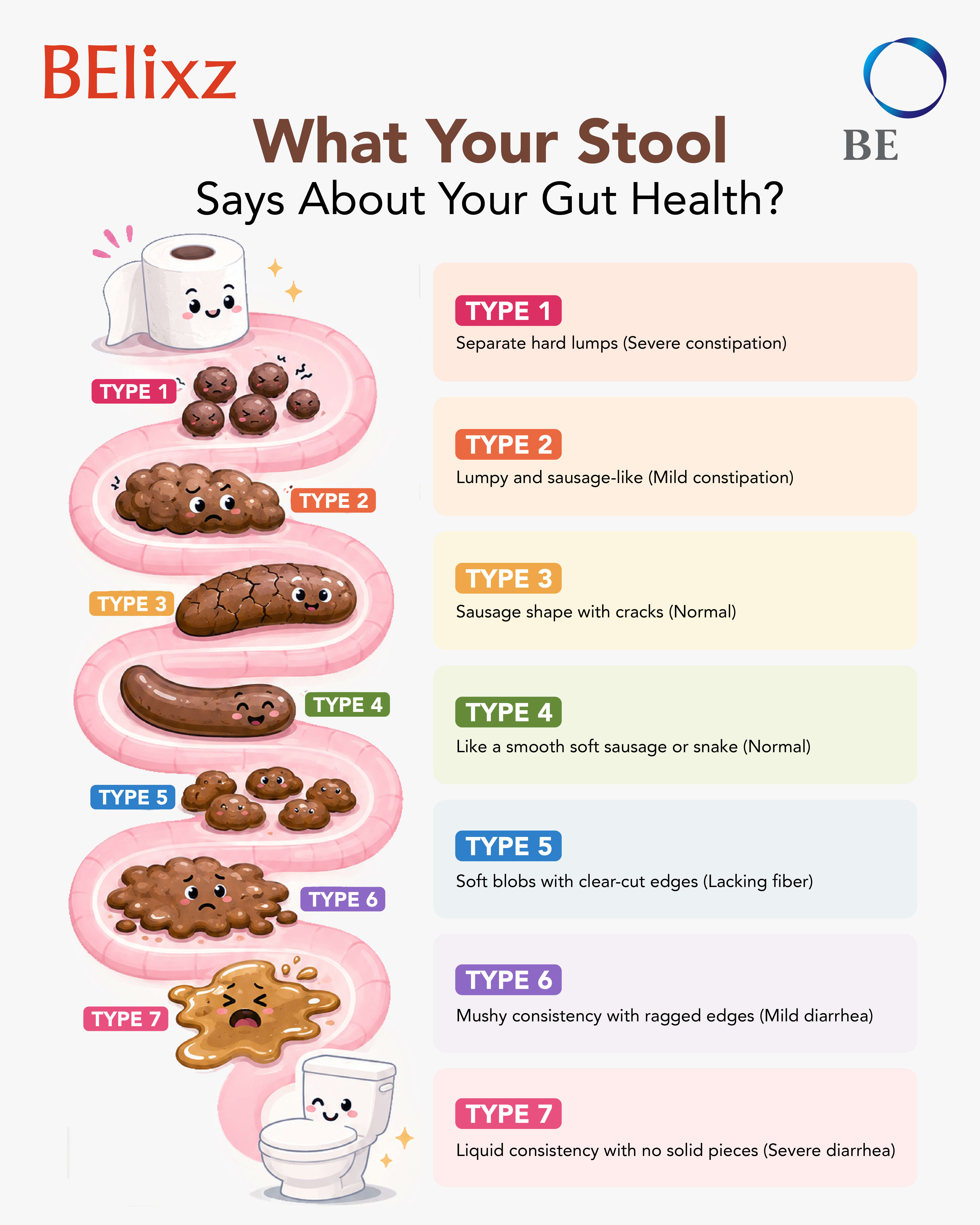
Your bowel movements can reveal a lot about your gut health. Healthy stool is usually soft, well-formed, and easy to pass, with bowel habits that feel regular for you.
Ongoing changes such as constipation, diarrhea, changes in stool consistency, or going much more or less often than usual may signal that your digestive system isn't functioning as it should.
A simple check: if your stool is often hard and lumpy, or loose and watery instead of smooth and soft, and this keeps happening, it's worth getting checked.
2. Frequent bloating or discomfort after eating
Bloating that keeps happening is connected to the balance of bacteria in your gut. A 2025 study by Deniz Sunnetci et al. found that people with ongoing bloating had fewer good bacteria, more of certain less helpful bacteria, and signs that their gut lining wasn't working as well as it should. In simple terms: an out-of-balance gut can make it easier for you to feel gassy, full, or swollen after eating.
3. Feeling sluggish or low on energy
Your gut bacteria break down fiber into small compounds that act like fuel for your body, including for the cells lining your gut itself. Studies on people with ongoing fatigue have found they tend to have lower levels of the "good" bacteria that make these fuel compounds. So a gut that's out of balance may mean your body has less of this fuel to draw on, which could show up as feeling tired or low-energy.
4. Skin looking different
This is the best-supported connection of the five. A 2026 study by Bosslett looked at genetic data to see whether gut bacteria actually cause skin problems and found real cause-and-effect links between gut imbalance and conditions like eczema and rosacea. The idea is that when good bacteria (like Bifidobacterium and Lactobacillus) drop too low, the gut lining gets "leakier," which can trigger inflammation that shows up on your skin.
5. Feeling run down
More than 70% of your body's immune cells live in your gut. Your gut bacteria help "train" these immune cells to tell the difference between harmful invaders and things that are actually fine (like food or your own healthy bacteria). When gut bacteria are out of balance, this training process can suffer, which may make it easier to feel run down or under the weather more often.

How Can You Support Your Gut Health?
If you've noticed some of these signs, start with healthy daily habits. As shared in our article What's Making Our Gut Unhappy? (And Ways to Fix It), simple changes like eating more fibre-rich foods, managing stress, staying active, and getting enough sleep can help support a healthier gut.
While eating whole foods is essential, incorporating a comprehensive supplement that combines prebiotics, probiotics, and postbiotics can streamline your routine. Learn more about how this three-in-one approach helps nourish beneficial gut bacteria and support a balanced internal environment in our article, BElixz N'exBio: A Smarter Way to Take Care of Your Gut.
A healthy gut is built through consistent daily choices. By paying attention to your digestion, bowel habits, diet, and lifestyle, you can better support your gut health journey.
References
- Bosslett, Marie. "The Gut-Skin Axis: New Evidence Links Microbiota to Skin Disease via Inflammatory Cytokines." Dermatology Times, 10 July 2026
- Nieto, Pamela. "Gut Health and Fatigue: How Your Microbiome Affects Energy." Tiny Health, 1 July 2026
- World Health Organization (WHO). Healthy Diet. Updated 2026.
- Akkoyunlu, Deniz Sunnetci et al. “Functional Abdominal Bloating Is Associated With Gut Microbiota Dysbiosis and Altered Intestinal Barrier Function: Experimental Evidence.” In vivo (Athens, Greece) vol. 39,6 (2025)
- A Review of the Influence of Prebiotics, Probiotics, Synbiotics, and Postbiotics on the Human Gut Microbiome and Intestinal Integrity. 2025.
- McPhail, Marissa N et al. “A Scoping Review of the Positive and Negative Bacteria Associated With the Gut Microbiomes of Systemic Lupus Erythematosus Patients.” Cureus vol. 16,4 e57512. 3 Apr. 2024
- Exploring the gut microbiome: probiotics, prebiotics, synbiotics, and postbiotics as key players in human health and disease improvement. 2024.
- Unveiling the therapeutic symphony of probiotics, prebiotics, and postbiotics in gut-immune harmony. Frontiers in Nutrition, 2024.
- An overview of postbiotics: unveiling their distinct role in gut health. 2024.